
Train those who truly make safety happen
Safety Training
Firmly embed safety
Our training courses at a glance
Safety isn’t just about a binder full of procedures. It’s enacted every morning, on the ground, in how a team leader starts their briefing, addresses a deviation, or praises a good reflex. For over 40 years, Fullmark has been training the men and women who champion safety daily. More than 15,000 managers and employees have attended our sessions. Our training doesn’t just tick a regulatory box. It changes behaviors, for good.
We offer 5 complementary solutions for one common goal: firmly embedding safety. Depending on your maturity, risks, and resources, we combine, stack, and adjust. Nothing generic.
• Qualiopi-certified professional training (OPCO fundable)
• Safety Coaching, our signature format
• Executive Committee (CODIR) support
• Individual coaching and mentoring, on-site
• Neuroscience conferences, to create a breakthrough
We offer 3 main themes, each available in two levels. Beginners establish solid foundations, while advanced participants move to the next level. Each module is based on an illustrated “Roadbook,” used during the session and kept afterward to extend learning long after the training.
- Leadership & Safety (levels 1 and 2). Giving meaning to rules, embodying safety, daring to address a deviation without breaking the relationship. Transforming a manager into a true safety leader in their sector.
- Communication & Safety (levels 1 and 2). Engaging safety talks, effective feedback (from simple remarks to firm re-alignment), non-violent communication applied to prevention. A strategic and highly operational focus.
- Neuroscience & Safety (levels 1 and 2). Risk perception, cognitive biases, attention, memory, motivation. Understanding the brain to concretely influence behaviors.
Fullmark is Qualiopi certified for training activities
The 6 key modules for safety training
Leadership & Safety
Invest in your future with safety leadership training and transform your managers into true safety champions!
Communication & Safety
Improve communication with practical keys to better share prevention messages and foster genuine commitment.
Neuroscience & Safety
Decipher brain mechanisms to better understand risky behaviors and optimize prevention actions in your daily life.
Firmly embed safety
Safety Coaching,
our signature format
This is not traditional training, and that’s intentional. Here, it’s not a trainer reciting fixed content, but a coach facilitating small groups. They know their objectives, but they adapt in real-time to participants’ actual concerns.
The approach: Questioning, role-playing, frank debriefings.
The result is content that precisely matches the participants’ on-the-ground reality. And engagement that takes off.
The catalog is extensive. We draw from it according to your current needs:
• Facilitate a participatory safety exchange
• Shared vigilance
• Root cause analysis (accident analysis)
• Job briefing
• Managerial safety visits (MSV)
• Learn to coach your employees
• Think before acting
• Crisis management
• Emotional intelligence: friend or foe?
• Stress management (wellness)
• Standardize the safety vision
An honest clarification. Because Safety Coaching falls under coaching (flexible format, variable duration), it does not qualify as conventional professional training.

Our approach: People first!
Let’s be direct. We don’t do pure regulatory safety. Others do that very well. Our playing field is behavior, attitude, leadership. What happens in an operator’s mind just before they take a shortcut.
- Few slides, lots of discussion. We don’t just run through a slideshow while the room tunes out. We question, we challenge ideas, we make people think. The content emerges from the group’s collective intelligence.
- Behaviors AND organization. A risky behavior is almost never an isolated fault. It’s part of a workload, pressure, an organizational structure. We work on both (the famous organizational and human factors).
- Neuroscience applied to the field. Understanding how the brain perceives danger, makes decisions under stress, and takes shortcuts changes the game. Our trainers use these recent insights to establish lasting automatic responses.
- Experts with field experience. Factory, construction site, workshop, laboratory. Our trainers speak your language and share their experiences, both successes and failures.
A Solid Safety Culture Starts with an Aligned Executive Committee
Executive Committee & Safety Culture
A strong safety culture starts at the top. If the executive committee merely signs off on memos, nothing truly changes on the ground. Teams immediately sense when words and actions don’t align.
Our CODIR program, structured in half-day sessions, aligns your leaders and clarifies their roles, including civil and criminal responsibilities. Concrete, operational, straightforward:
- Team building and common language
- Strategy for implementing safety culture
- Roles and responsibilities (including legal aspects and the Labor Code)
- Giving meaning to the safety initiative
- Communication in service of safety
- Neuroscience applied to risky behaviors
- Safety measures and their management
Real-life cases, simulations, collaborative workshops. By the end, the CODIR leaves with a roadmap, not just a list of good intentions.

Sometimes the collective isn't enough
Individual coaching and mentoring
Sometimes, the collective isn’t enough. A manager needs tailored support for their personality and professional constraints. The coach observes them on-site, in real situations: a team meeting, a delicate re-alignment, onboarding a new employee, managing a conflict. Then comes the debrief, honest and non-judgmental.
Two approaches, depending on the person’s needs. In coaching mode, we encourage reflection and reasoning to find one’s own answers. In mentor mode, we transmit concrete, directly applicable management techniques.
The big advantage: The manager remains in their position, with their operators, without blocking production time. Learning happens where it matters, in reality.

Keynotes for a large audience
Neuroscience conferences
Want to create a real breakthrough for a large audience, during a seminar or a safety day? Our behavioral neuroscience conferences explain, with examples, why we take risks that we know are dangerous. It’s lively, concrete, and leaves a lasting impression far longer than a reminder of instructions.
Our trainer shares with unusual enthusiasm all the links between neuroscience (how our brain works) and workplace safety. Each conference will truly give meaning to the safety culture in your company.
For example, we’ll understand why some people “skip” certain safety rules to save time. This type of behavior is clearly explained by understanding how our brain works. And as soon as we understand that, we then know how to implement effective countermeasures.
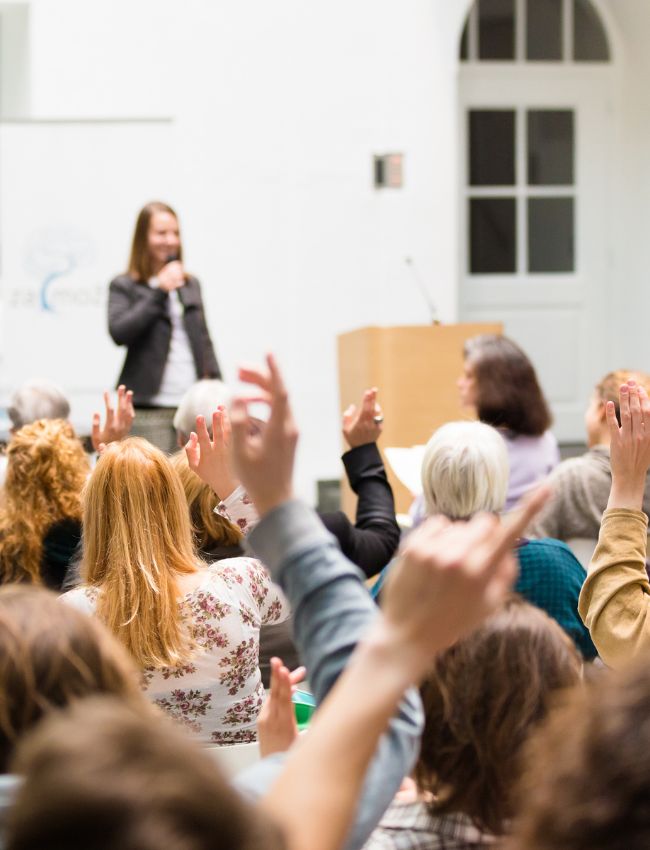
A format adapted for each type of stakeholder
Who are our training courses for?
From operator to executive, everyone has a role to play. Our formats adapt to this:
• Executives and CODIR. Championing the vision, embodying exemplary behavior, assuming responsibilities.
• Managers and team leaders. Our core target. They are the ones who bring safety to life every day.
• HSE, QHSE managers, prevention specialists. Structuring the approach, equipping the managerial line, measuring progress.
• Employees and new hires. Understanding, adhering, becoming actors rather than spectators.
No technical prerequisites. The only thing we ask for is the desire to progress.

Investing in safety training is profitable
What concretely changes
Safety training is not an expense; it’s a profitable investment. In France, a workplace accident costs an average of €25,000 to €50,000 once direct and indirect costs are added: absences, disorganization, replacement, investigations, image. Compared to that, the price of training that prevents even one serious accident seems negligible. And beyond the numbers, there’s the essential: teams returning home healthy, and a company where vigilance becomes a collective reflex rather than a forced constraint.
An example? At Keolis, the number of accidents decreased by 60%! The client testifies: “After reaching peaks, the number of workplace accidents decreased by 60% in a few months with Fullmark’s relevant collective and individual awareness approach; we will extend this initiative to the entire company.” C. V. (Head of Rolling Stock Maintenance Department, Metro Tramway Directorate)
Let's talk about your on-the-ground reality
No generic program pulled from a drawer. We listen to your challenges, risks, and objectives, then we build the solution with you. The first conversation costs nothing and already clarifies a lot.
Frequently Asked Questions - FAQ
What is the difference between safety culture training and traditional safety training?
Traditional safety training transmits rules and procedures. Safety culture training, as seen by Fullmark experts, works upstream: attitudes, beliefs, managerial posture. The goal is for good reflexes to hold even when no one is watching.
Should managers or operators be trained first?
At Fullmark, we primarily advise not to forget anyone and ideally to train both populations more or less simultaneously. The example and posture of team leaders directly influence on-the-ground behaviors. An operator rarely applies an instruction that their supervisor doesn't believe in themselves. That's why it's important not to forget to train managers and even the executive committee.
What is Safety Leadership?
It is a manager's ability to champion safety through example, dialogue, and recognition of good behaviors, far beyond simply reminding of instructions. A safety leader inspires and influences; they don't just supervise.
How does Safety Coaching differ from traditional training?
It takes place in small groups, starts from participants' real situations, and develops their posture through questioning and reflection on real-world situations and problems from the field. Almost no slides. It's a coach who facilitates, not a trainer who presents material.
Can the training be adapted to our sector and risks?
Yes, systematically. Each intervention is custom-built based on your on-the-ground reality, your specific risks, and your objectives. Whether you are in industry, construction, logistics, chemistry, or pharma, the content aligns with your environment.
How long does it take to evolve a safety culture?
It's a trajectory, not an event. The first effects are seen quickly (engagement, dialogue, feedback). Lasting embedding, however, is built over several months by combining training, coaching, and on-site rituals.
How is the effectiveness of safety culture training measured?
Through an initial diagnosis, monitoring observed behaviors, and the evolution of indicators: frequency rate, near-misses reported, level of engagement. We know where we start and where we're going.
Do your training sessions take place at our site or remotely?
Most often at your site, for total immersion in your operational reality. Our trainers can also facilitate some sessions remotely, via video conference, in a format designed to remain interactive.
What is the price of safety training at Fullmark?
Each project is subject to a personalized analysis, so prices are provided upon quotation. Our offer covers a wide range of formats, from short workshops to comprehensive programs. The best approach is to discuss it to align the solution with your budget.


