
Professional Training
Neuroscience & Safety
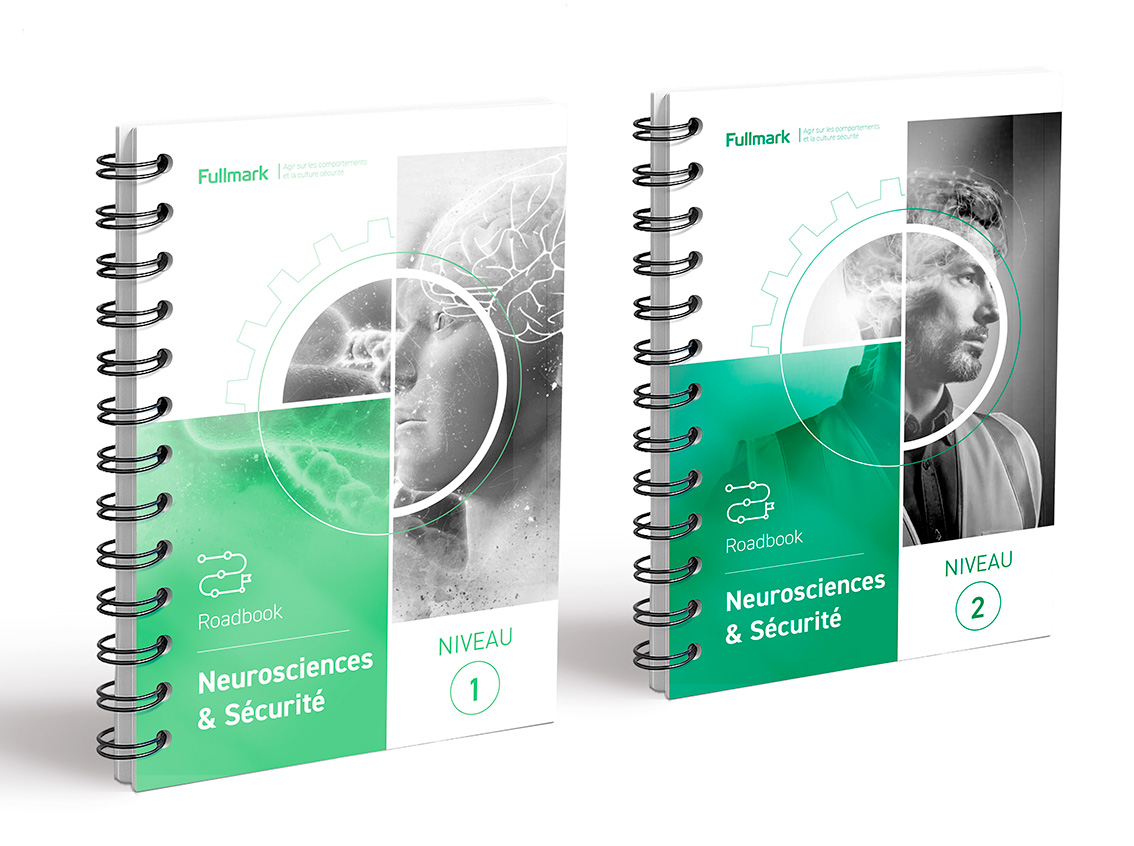
Neuroscience offers powerful levers to firmly embed good safety practices. Our two dedicated modules unravel the brain’s mechanisms to better understand risky behaviors and optimize preventive measures. Designed in two progressive levels, they provide concrete solutions to transform safety culture from within. An innovative approach to effectively influence decision-making and the adoption of good behaviors.
The strengths of the training
-
Objective
By better understanding how the brain works, learn the keys to better involve teams in safety. -
Objectives
This participatory and interactive day will teach you 7 essential characteristics of our brain, their implications for safety, and above all, numerous concrete solutions to equip your teams against dangers and prevent accidents. -
Topics Covered
• The brain is neuroplastic: It is unique, hyperactive, and adaptable
• The ecological brain: It is automatic and adaptive
• Pleasure and threat: Reward and threat
• The brain is attentive
• The brain is autonomous
• The Myth-Making Brain: Cognitive biases
• The brain is social -
Targeted Skills
Discover the SCARF model to motivate my team to adopt safety-compliant behavior.
Learning Materials
Training Program
- Identify success factors and difficulties of shared vigilance.
- Discover the steps to practice shared vigilance daily.
- Learn “adult-to-adult” communication techniques.
- Learn to take our emotions into account.
- Develop our capacities through role-playing and real-life experiences.
Here are some concepts that will be covered:
The human brain consists of 86 billion neurons and 1 quadrillion connections. It also makes 35,000 decisions per day. However, only 5% of these decisions are consciously made by the individual. The remaining 95% are managed in “automatic mode” by our brain. While this fast and energy-efficient way of functioning is essential, decisions made in this manner are not always adequate.
Modifying Behaviors
By better understanding brain mechanisms, we can modify them. The brain is adaptable throughout life; our experiences and activities transform it, creating new connections, eliminating others, and developing or reorganizing neural networks.
Reward vs. Threat
The most primitive learning mechanisms are the reward and threat circuits. Originally necessary for the survival of the species, they remain essential today for our health and safety and are at the root of many decisions.
The Illusion of Multitasking
Our brain receives a constant flow of information, which it is impossible to process in detail simultaneously. While several areas of our brain can activate at the same time, it can only process one task at a time.
Multitasking thus leads to numerous drawbacks: distraction, high energy consumption, reduced productivity, increased errors, decreased creativity…
It is therefore necessary to sort through all the information received and select what needs to be processed first, while being aware that our attention and concentration capacities are limited. This is why Fullmark emphasizes shared vigilance, helps prioritize difficulties, favors single-tasking, or encourages breaking down work into mini-tasks.
Cognitive Biases
The brain uses shortcuts it has developed to quickly interpret reality. In urgency, uncertainty, or when faced with a large amount of information, individuals will unconsciously simplify their mental schemas to quickly assess a situation and make a decision. These mental shortcuts are cognitive biases.
However, these mechanisms can mislead us and cause us to make irrational and/or dangerous decisions. Thus, we tend to underestimate risks and overestimate our ability to control an event. Our mindset pushes us to attribute negative events to uncontrollable external factors and to believe that positive events are more likely to occur than they actually are.
Through its campaigns, Fullmark highlights these risks and encourages overcoming these cognitive biases, notably through collective intelligence, co-creation of solutions, and the integration of various stakeholders in decision-making.
Fullmark: Applying Neuroscience in Your Company
Fullmark is among the first HSE players to address the brain’s role in safety in a “Safety Coaching” mode and to provide so many innovative solutions.
By working with your managers, Fullmark helps you create the ideal conditions to prevent accidents.
Neuroscience Conference
Would you like an expert to give a truly impactful conference during a management committee meeting, a managerial meeting, a seminar day, or any other occasion?
We offer 3 topics that have already been delivered on numerous occasions and with great success! Our trainer shares with uncommon enthusiasm all the connections between neuroscience (how our brain works) and workplace safety. Each conference (lasting approximately 1 hour depending on your schedule) will give real meaning to the safety culture in your organisation. For example, we will understand why some people “skip” certain safety rules to save time. This kind of behaviour is clearly explained by understanding how our brain works. And once we understand this, we know how to put effective countermeasures in place.
Module 1
Making sense of safety measures (safety talks, VCS, BdP…)
- 68% of workplace accidents are linked to human behaviour
- Understanding the brain better to better understand how I and my team function
- Our brain: is it a FRIEND or ENEMY of Prevention & Safety?
- Understanding the Conscious Attentive mode and the Subconscious Automatic mode
- Integrating adapted countermeasures into daily life

Module 2
An accident is not inevitable – Beware of overconfidence and the weight of habits
- Should we trust our brain?
- Could too much confidence in it actually be dangerous?
- Our brain, without meaning to, deceives us and sometimes makes us act in a completely irrational way. Even a dangerous one.
- What is really happening in our brain at the moment we make a decision?
- What tools do we have to avoid the traps it sets for us?

Module 3
The importance of adopting the right individual and collective behavioural reflexes
- We don’t have “reason” to adopt dangerous behaviours, but we do have “reasons” for doing so
- What role do our emotions play in the decision-making process?
- Why do we make poor decisions?
- How does stress intervene and influence our decision-making process?
- What means do we have to protect ourselves?
- At an individual level: the value of habits
- At a collective level: the importance of shared vigilance

What are the contributions of neuroscience to workplace safety?
Neuroscience can bring several important elements to the management of safety behaviors in companies. Here are some examples:
- Understanding brain mechanisms related to behavior: Neuroscience can help understand the mental processes underlying safety behaviors, such as risk-taking, attention, and decision-making. By understanding these processes, it is possible to develop effective strategies to improve safety behaviors.
- Objectively assessing risks: Neuroscience can help identify risk factors associated with certain tasks and assess risks more objectively. This allows for the implementation of more effective risk management strategies and the reduction of safety-related incidents.
- Using effective training techniques: Neuroscience can help identify the most effective training techniques to improve safety behaviors. For example, by using training approaches based on the principles of long-term memory and repeated learning, it is possible to promote the adoption of safe behaviors.
Evaluating the effectiveness of safety programs: Neuroscience can help evaluate the effectiveness of safety programs by measuring changes in employee behaviors and attitudes. This helps determine if safety programs have a positive impact on safety behaviors.
In summary, neuroscience can provide valuable tools and information to improve the management of safety behaviors in companies. By using this knowledge, companies can reduce risks and improve employee safety.
What are the 3 main areas of the brain?
It is common to hear about the human brain in terms of three main areas or divisions, referring to its primary anatomical and functional structures. These three areas are the reptilian brain (or primitive brain), the limbic brain, and the neocortex.
- Reptilian brain (primitive brain): This area is considered the oldest in evolutionary terms and is present in reptiles and mammals. It includes structures such as the brainstem, cerebellum, and medulla oblongata. The reptilian brain is responsible for vital functions essential for survival, such as regulating heart rate, respiration, sleep, as well as basic reflexes like the fight-or-flight response.
- Limbic brain: This area is located above the reptilian brain and encompasses several structures, including the amygdala, hippocampus, and hypothalamus. The limbic brain is associated with emotions, memory, the regulation of certain hormonal functions, and emotion-related decision-making.
- Neocortex: The neocortex is the most evolved part of the brain and occupies a large portion of the human brain’s surface. This area is responsible for higher cognitive functions, such as abstract thought, reasoning, sensory perception, language, planning, and complex decision-making.
It is important to note that this tripartite division of the brain is a simplification, and the different regions of the brain constantly interact to perform a wide range of complex functions. The brain is actually an extremely interconnected organ, with complex neural networks that coordinate activities and enable humans to think, feel, act, and interact with the world around them.
What are the main cognitive biases encountered in safety?
- Overconfidence Bias: This is the tendency to underestimate the level of risk, or even deny its existence. Anyone repeatedly placed in complex or delicate professional situations, who has successfully dealt with them or benefited from them, will subsequently show a propensity to minimize the presence of risk and the extent of its consequences. This is also known as the “illusion of experience.”
- Illusion of Control: A situation in which a person is convinced they have control over their environment and random phenomena. They believe they can promote positive events or avoid negative ones.
- Optimism Bias: The tendency to perceive the occurrence of positive events as more probable than they actually are, and conversely, to think that negative events are less likely to happen to us than they actually are (Taylor & Brown, 1994)
- Illusion of Invulnerability: A cognitive bias that leads us to believe that we are less susceptible to biases than other people. It is a variant of the superiority bias, which leads individuals to believe that they have better abilities than others.
How to exit automatic mode at the right time?
As seen above, to conserve energy, it operates 95% of the time in automatic mode and only 5% in conscious mode. It is during these automatic modes that most accidents occur.
How to exit automatic mode at the right time? The minute of pause, self-check, and cross-check are 3 techniques aimed at exiting automatic mode before performing dangerous tasks. The minute of pause aims to regain one’s composure after being interrupted by someone or something unusual. This allows for a return to conscious mode.
These different countermeasures will be developed in more detail in our special training module.
Neuroscience Webinar
This webinar, organized in partnership with Inforisque, helps understand how the insights provided by neuroscience can truly give meaning to the safety culture in your company. It explains why some people “skip” safety rules to save time. This type of behavior is clearly explained by understanding how our brain works. And once we understand this, we know how to implement effective countermeasures.
Why train managers in neuroscience?
Training managers in neuroscience can have several benefits for companies. Here are some reasons why it can be advantageous:
- Understanding brain mechanisms: By understanding the brain mechanisms related to human behavior, managers can better understand their employees’ decisions and actions. This can help managers better handle conflict situations and foster more effective communication.
- Improving emotion management: Emotions can often play an important role in the workplace. By understanding the brain processes related to emotions, managers can better manage their own stress and that of their employees. This can contribute to creating a more positive work environment and improving productivity.
- Fostering motivation: Managers can learn to use knowledge from neuroscience to motivate their employees more effectively. By using motivation techniques based on brain mechanisms, managers can help employees feel more engaged and perform better.
- Improving decision-making: Managers can also use knowledge from neuroscience to improve their own decision-making. By understanding the mental processes involved in decision-making, managers can make more informed and effective decisions.